



Most marketing campaigns don’t fail because the ads are bad.
They fail long before that.
The failure usually happens in the planning phase—when teams skip clarity, rush to execution, and hope performance will magically sort itself out.
If you’ve ever launched a campaign that should have worked but didn’t, chances are the issue wasn’t creative or budget. It was the foundation.
The Real Problem: Starting With Tactics Instead of Thinking
Founders are wired for action. When growth slows, the instinct is to do something:
- “Let’s run ads.”
- “We need content.”
- “Let’s try LinkedIn.”
But jumping straight to execution creates campaigns built on assumptions instead of decisions.
Without a clear plan, every ad, post, or landing page is guessing:
- Guessing who it’s for
- Guessing what matters
- Guessing what success looks like
Execution doesn’t fix unclear thinking—it amplifies it.
“Everyone” Is Not an Audience
One of the fastest ways to kill a campaign before launch is targeting too broadly.
“Founders.”
“Small businesses.”
“People who might be interested.”
When a campaign tries to speak to everyone, it resonates with no one.
Strong campaigns start with sharp audience clarity:
- A specific role
- A specific problem
- A specific moment where change is needed
If you can’t clearly describe who the campaign is for and why now, your messaging will always feel generic—and generic doesn’t convert.
Campaigns Without a Goal Are Just Content
Many campaigns launch without a real definition of success.
Goals like:
- “Increase awareness”
- “Drive engagement”
- “Get more leads”
sound reasonable, but they’re not actionable.
Without a single, measurable outcome, teams optimize the wrong things:
- Clicks instead of conversions
- Engagement instead of pipeline
- Activity instead of results
A campaign needs one clear goal that everyone can rally around:
- Book demos
- Capture qualified leads
- Drive signups
If success isn’t defined upfront, performance becomes subjective—and learning disappears.
The Click Is Not the Finish Line
Even well-planned campaigns fail when no one thinks about what happens after someone clicks.
Most campaigns stop at:
Ad → Landing Page → Hope
But growth happens in the follow-up:
- Confirmation pages
- Email or SMS nurture
- Retargeting
- Clear next steps
A campaign isn’t a moment—it’s a sequence.
And if that sequence isn’t planned, results leak quietly.
Why Campaigns Break: Everything Is Planned in Pieces
Another reason campaigns fail before launch is fragmentation.
Ads live in one tool.
Content ideas live in docs.
Follow-up lives “somewhere else.”
No one sees the full picture.
When planning is scattered, teams lose alignment:
- Strategy lives in people’s heads
- Execution drifts from intent
- Gaps aren’t visible until performance drops
Most founders don’t need more tools.
They need a clearer way to think.
Planning Campaigns as Flows Changes the Outcome
The biggest shift high-performing teams make is changing how they plan.
Instead of planning assets, they plan the journey.
Visualizing a campaign as a flow forces better questions:
- Who is this for?
- What problem are we solving?
- What action do we want?
- What happens next?
When you can see the full path—from first touch to follow-up—weak campaigns don’t make it to launch.
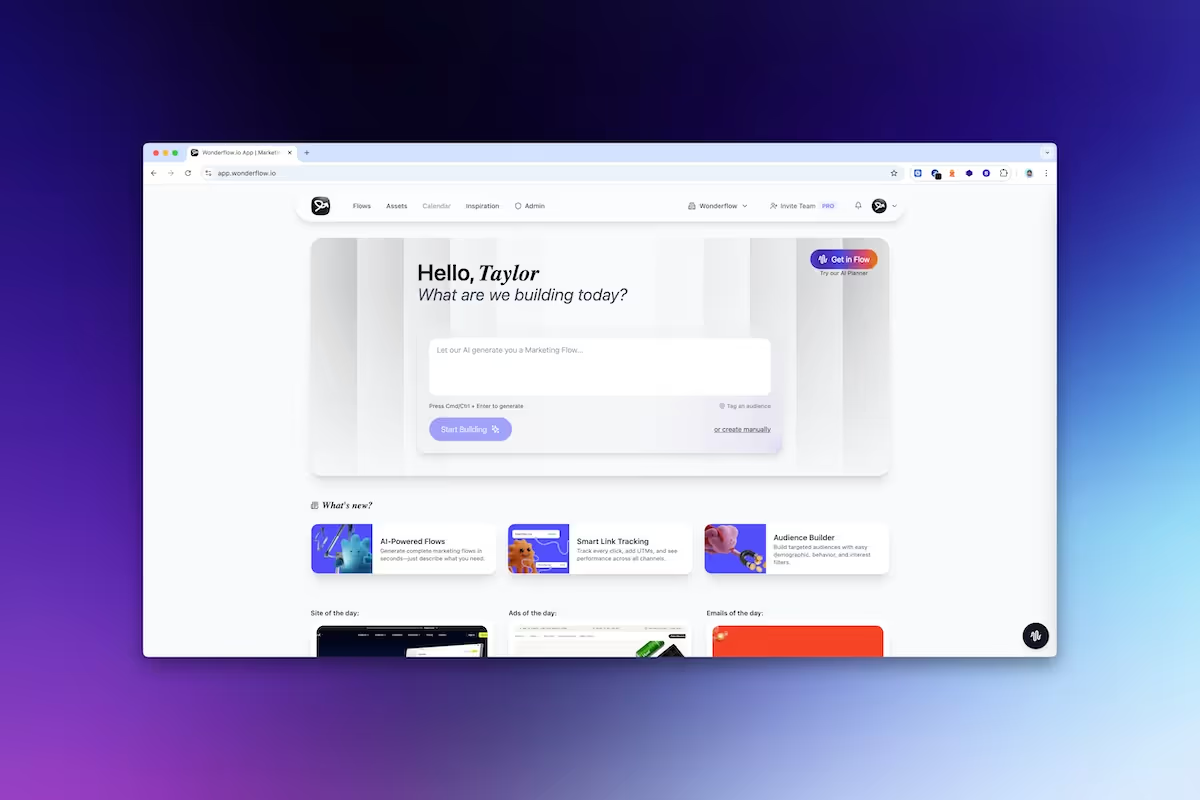
That’s the idea behind Wonderflow: a planning tool that helps founders and teams map campaigns as connected flows, not disconnected tasks.
By visualizing audiences, messaging, creative, and follow-up in one place, planning becomes concrete. Gaps show up early. Decisions get clearer. Execution gets easier.
Better Campaigns Start Earlier
Most campaign failures aren’t creative failures.
They’re planning failures.
The brands that scale don’t move faster at the start—they think clearer.
They define the audience.
They define the goal.
They define the path.
Then they launch.
If your campaigns keep underperforming, don’t start with new ads.
Change your starting point.
Plan the flow—then press launch.